
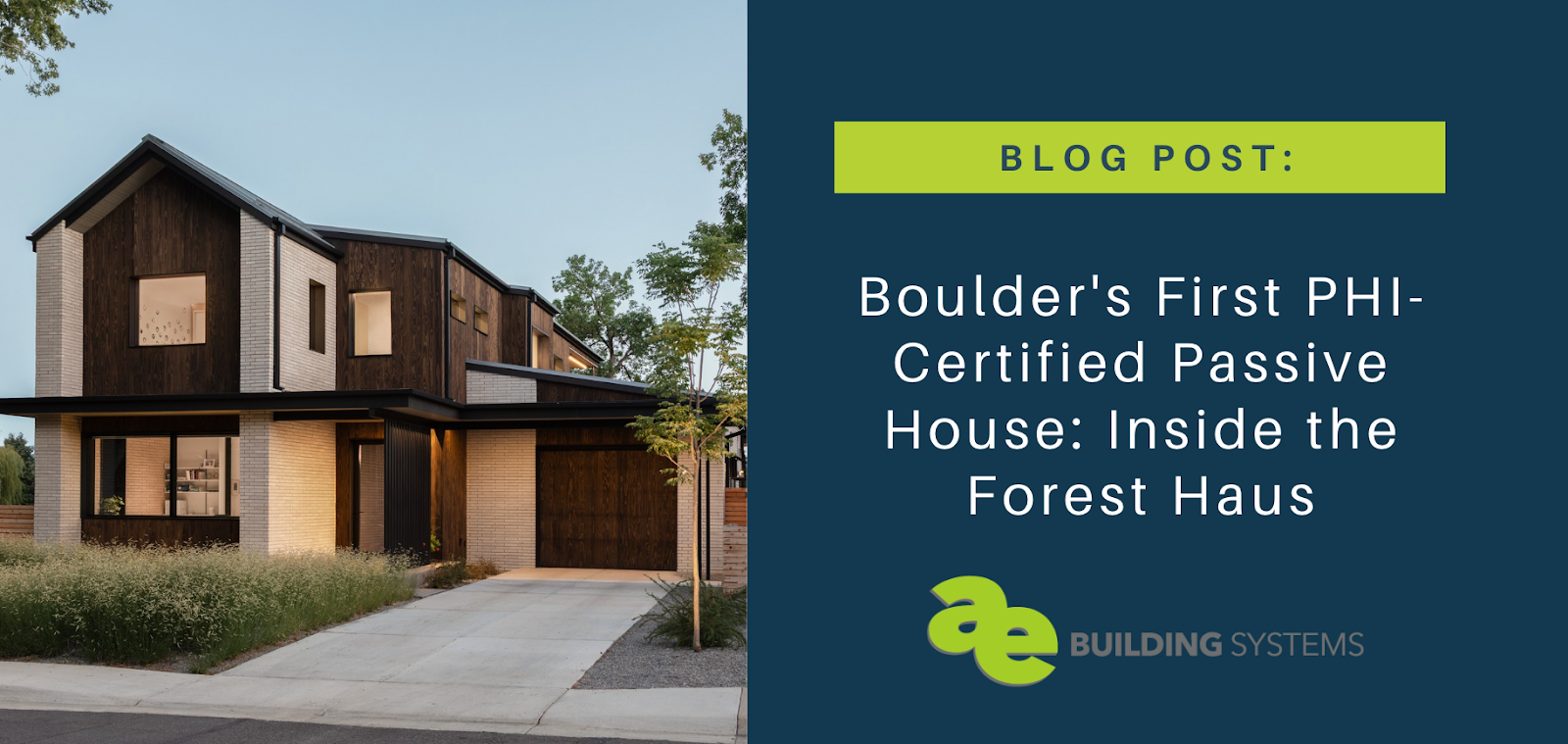
When Matt Brill set out to build a home for his family in Boulder, Colorado, he wasn’t looking to simply check an energy-efficiency box. He wanted to achieve the pinnacle of residential building performance with a home that would deliver extraordinary comfort, radical quiet, and long-term resilience. The result is Forest Haus: a 5,000-square-foot certified Passive House that became the first PHI-certified home in the City of Boulder.
Why Passive House?
Matt’s background spans computer science, business, urban planning, and construction. As founder of Bauen Build, he brings a systems-thinking approach to every project, and Forest Haus was no exception.
“Passive house is the pinnacle of building,” Matt explains. “I wanted a home that met the demands of our family yet provided a space with the ultimate of comfort and quiet.” He partnered with architect Greg D. Fisher, who had already designed and built a Passive House for himself in Fort Collins, CO, ensuring the entire design team shared a commitment to high-performance principles from day one.
The Building Envelope: Where Performance Is Made
Forest Haus is an infill project, meaning that the original home was demolished and the new structure built from scratch, giving Matt and his team full control over every detail of the building envelope. The wall assemblies feature thermally broken double-stud construction with insulated corners, achieving an impressive R-53. The slab delivers R-88, and continuous air sealing was executed using ProClima products.
Armatherm thermal breaks were installed under structural columns, and the design deliberately avoids cantilevered features. As GC, Matt sequenced the build around this envelope-first philosophy: plan the control layers, then build around them.
Fenestration: Smartwin Solar Windows and Doors
Windows are the most thermally vulnerable component of any building envelope, and the most visible expression of a home’s relationship to its environment. For Forest Haus, the specification was Smartwin Solar across all windows, lift-slide doors, and swing doors. These European-style units deliver the combination of ultra-low U-values and appropriate solar heat gain critical to meeting the Passive House energy balance in Colorado’s high-altitude climate. AE Building Systems was proud to assist Advantage Architectural Woodwork with these Smartwin products on this project!
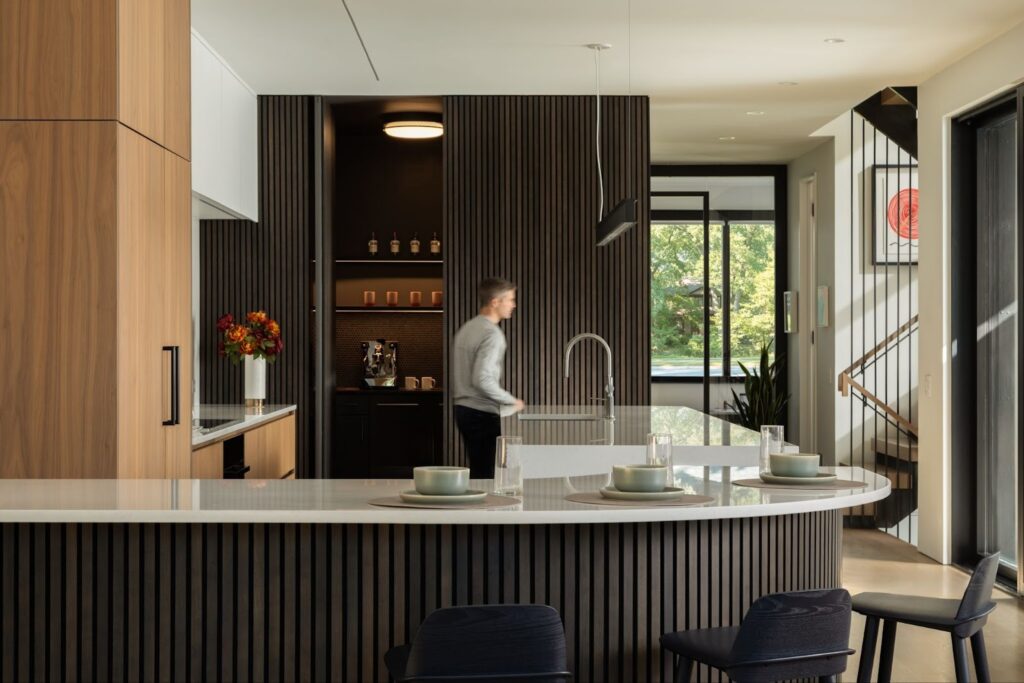
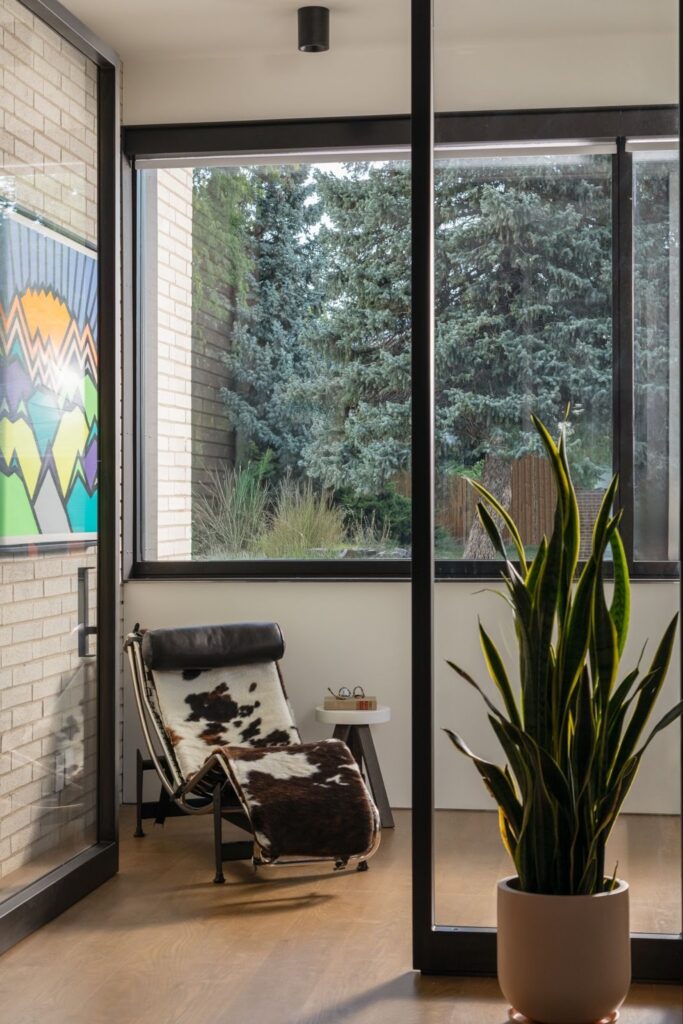
The window selection wasn’t merely a performance decision; it was architectural. Expansive glazing supports the seamless indoor-outdoor flow that defines the home’s character, while the thermal performance of the Smartwin units ensures that those views never come at the cost of comfort.
Mechanical Systems: Precision From the Start
Ventilation is handled by a Zehnder Q600 ERV with Comfotube ducting and manifold distribution; one of the most respected systems in the Passive House world for its efficiency and whisper-quiet operation. A four-zone heat pump HVAC system handles conditioning, supported by a heat pump water heater. The home is all-electric with a solar PV system and storage, and a ductless condensing dryer eliminates yet another penetration through the envelope.
Matt’s key lesson from the project: design the mechanical system as early as possible. “Think through the mechanical layout before breaking ground,” he advises, “and build in future-proofing from a technology standpoint.” Forest Haus also incorporates a Lutron lighting control system and specialized fixtures.
The Results
Forest Haus achieved a blower door result of 0.31 ACH50, which was well within the PHI Passive House threshold, and earned full PHI certification. It stands as the first PHI-certified home in the City of Boulder, a landmark achievement for both the project team and the broader Colorado high-performance building community.
What High-Performance Windows Make Possible
Projects like Forest Haus demonstrate what becomes possible when every component of the building envelope is selected with the same rigor. Windows are not an afterthought, but instead they are the critical interface between the interior environment and the outside world. Choosing the right fenestration solution is what allows a Passive House to perform as designed: no cold spots, no drafts, no noise infiltration, and no compromise between views and comfort.
If you’re planning a high-performance build in Colorado or the Mountain West, we’d love to talk about your fenestration strategy. Contact our team at AE Building Systems to explore window and door solutions that will help your project reach its full potential — and explore more of Bauen Build’s work atbauenbuild.com/forest-haus.
Greg Fisher, architect, links…
- https://www.gregdfisherarchitect.com/
- https://www.instagram.com/gregdfisherarchitect/
- https://www.facebook.com/gregdfisherarchitect/

Leave a Reply