
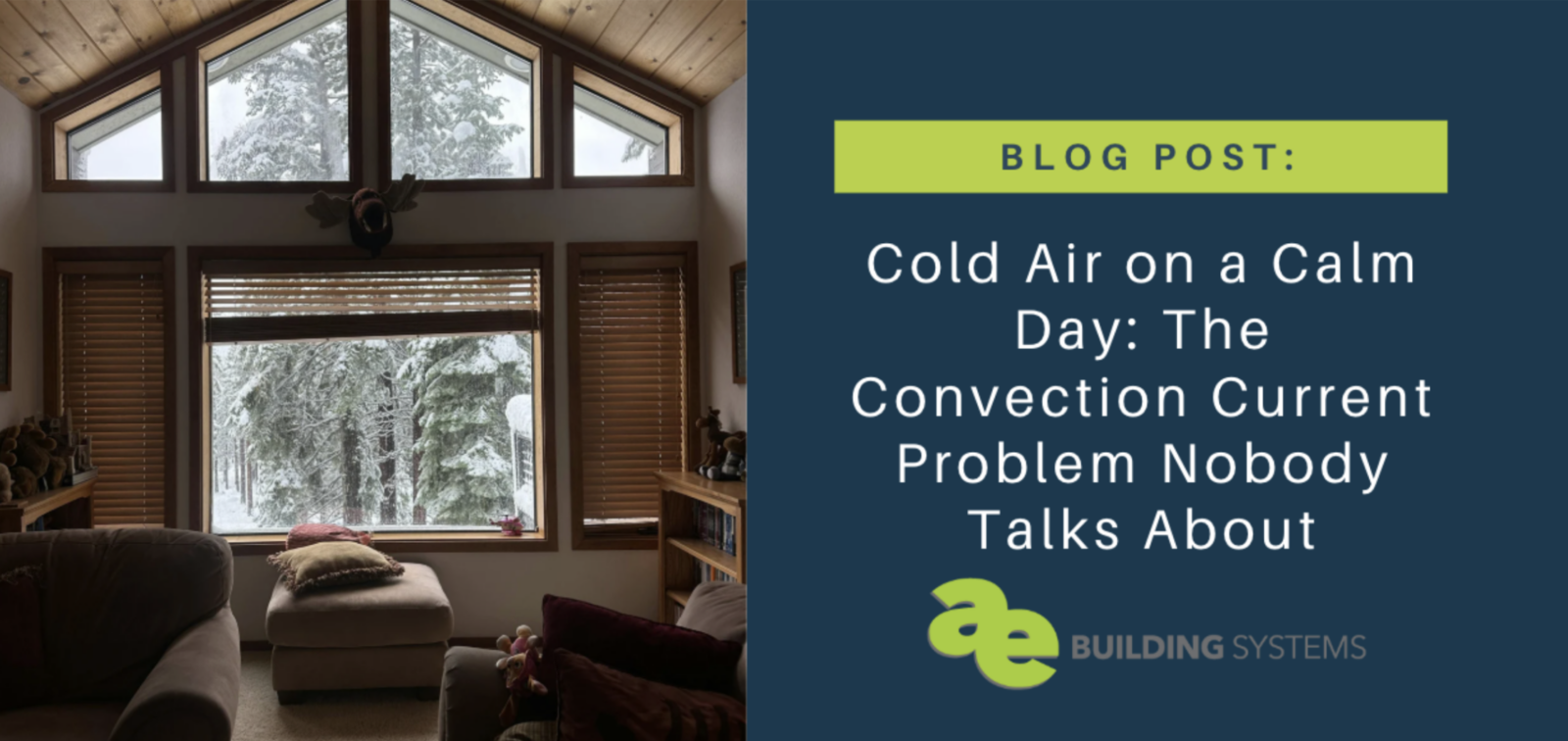
When homeowners complain about feeling cold air moving through their living room on a perfectly still day, the first instinct is usually to blame the windows. While the windows may well be part of the problem, what’s actually happening is more interesting than a simple air leak, and understanding it points toward a more complete solution.
If the wind isn’t blowing outside and you’re still feeling what seem like drafts, you’re probably not experiencing drafts at all. You’re experiencing a miniature climate system living inside the home itself.
The Room That Had Everything Working Against It
We recently worked with a client whose homeowners were dealing with exactly this situation. Their living room had high ceilings, two levels of large builder-grade production windows (fixed transoms up high and sliding units at ground level), and an open stairwell feeding directly into the space.
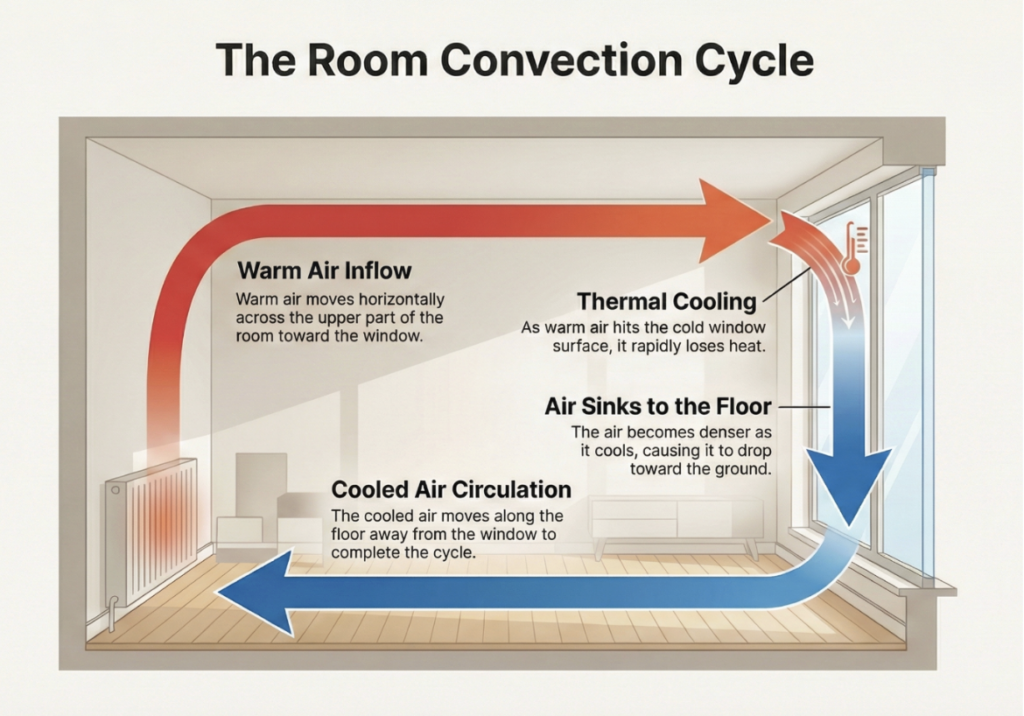
Here’s what was actually going on… The under-performing windows had cold interior glass surfaces. Warm room air would contact that cold glass, lose its heat, and sink. That cooled air would then travel across the floor and get replaced by new warm air descending to meet the glass again. That circular movement is a convection current, and it’s what the homeowners were feeling as a “draft.”
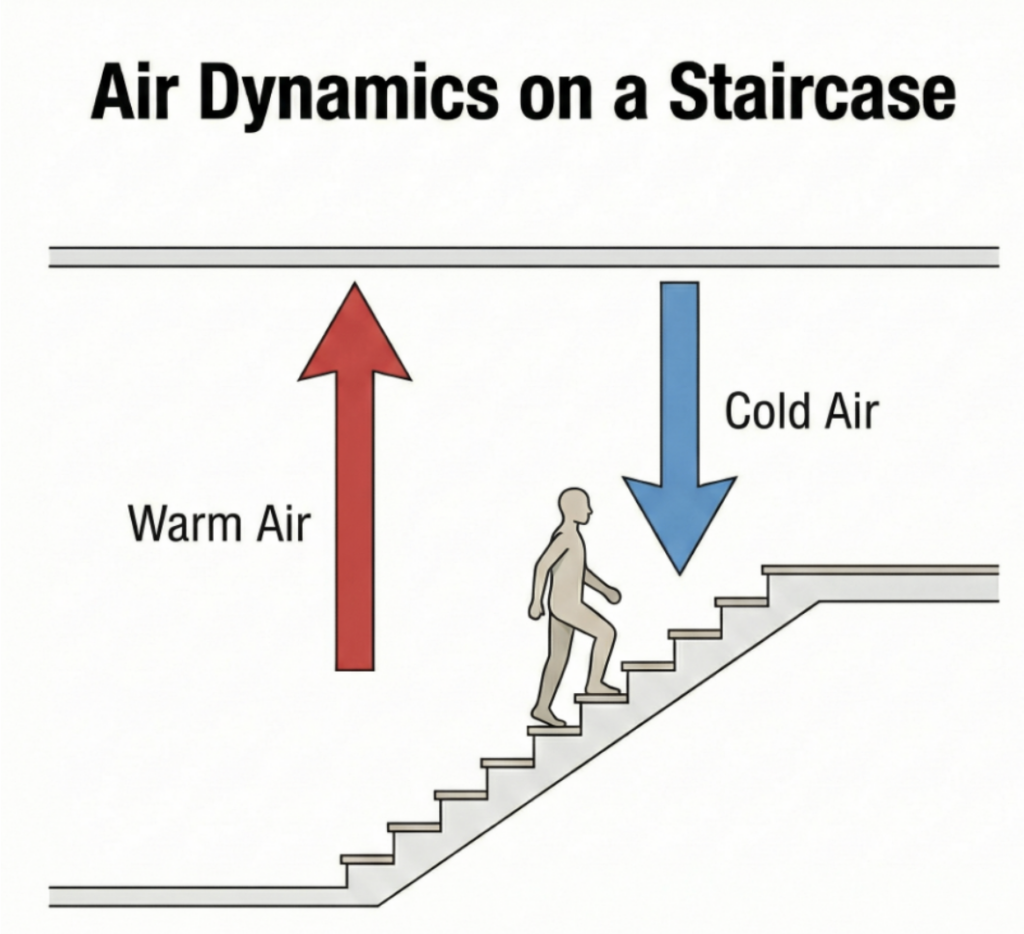
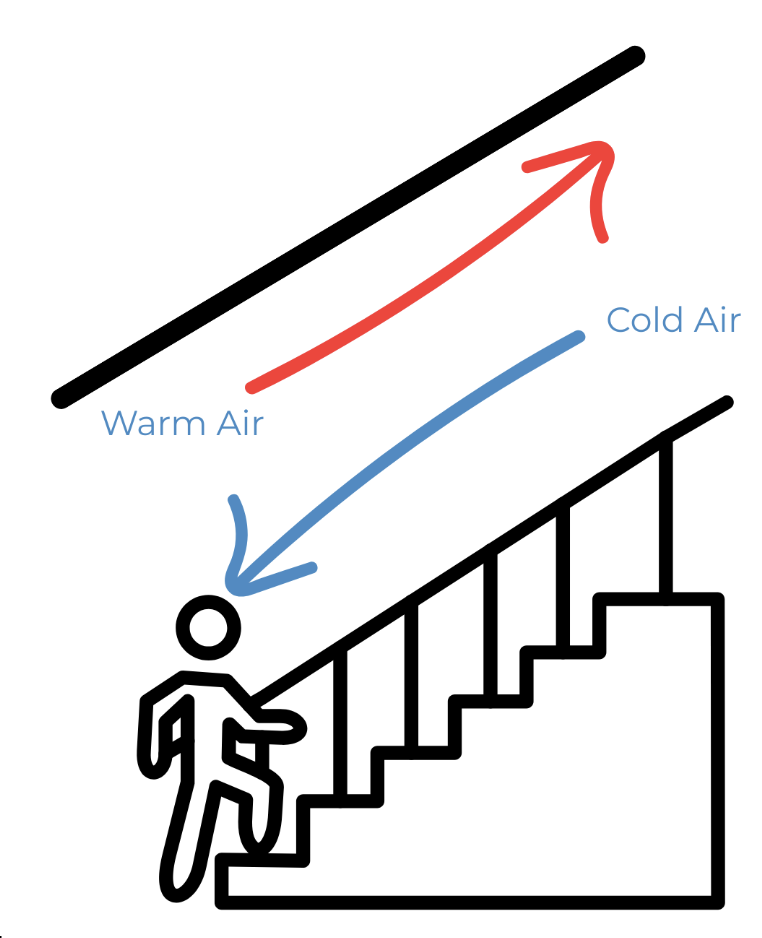
At the same time, the open stairwell was acting as a cold air delivery system, channeling chilled air from the upper levels down into the living room. The room also had can lights and an integrated speaker system punched through the ceiling above it, the kind of penetrations that are frequently poorly insulated and leaking into a cold attic. So there was cold air coming down the stairs, convection loops cycling off the windows, and cold infiltrating through the ceiling all at once. The HVAC system was running, but it was fighting a losing battle against physics.
Why This Happens
Drafts and stratification are almost always the result of interior temperature deltas creating microclimates within the home. The temperature between a basement and second story in a typical house can vary 15 to 20 degrees, and most people simply live with it without realizing it doesn’t have to be that way.
When the interior surface of a window is significantly colder than the room air, it becomes an engine for convection currents. The bigger the temperature gap, the stronger and more persistent those currents become. Add a stairwell, a leaky attic, and limited insulation in the walls, and you have a room that generates its own weather.
The Fix Starts at the Envelope
There are two sides to addressing this kind of problem. The first is symptom management: ceiling fans, better HVAC distribution, and mechanical ventilation systems can all help mix the air once a problem already exists. The second, and more lasting, solution is reducing the temperature delta at the source by improving the building envelope.
That means high-performance windows, continuous insulation at walls and attic, and diligent air sealing at ceiling penetrations and other leakage points. When the interior glass surface of a window stays closer to room temperature, as it does with a well-built triple-pane or thin-glass unit, the convection engine loses most of its power. Fewer cold surfaces mean fewer convection loops. Fewer convection loops means fewer perceived drafts.
You cannot solve a building science problem with a thermostat. If homeowners are complaining about drafts on a still day, the answer starts with the windows and the insulation surrounding them.
Alpen Windows as Part of the Solution
Alpen’s high-performance windows are designed specifically to keep interior glass surfaces warm, reducing the temperature delta that drives convection currents and stratification. Whether you’re working on a new build or addressing comfort problems in an existing home, upgrading to Alpen is one of the highest-impact steps you can take toward a stable, comfortable interior climate. Contact us to learn more or request a quote.

Leave a Reply